In Conversation
Expert Interviews
Conversations with the designers, craftspeople, and thinkers shaping contemporary Japanese design.
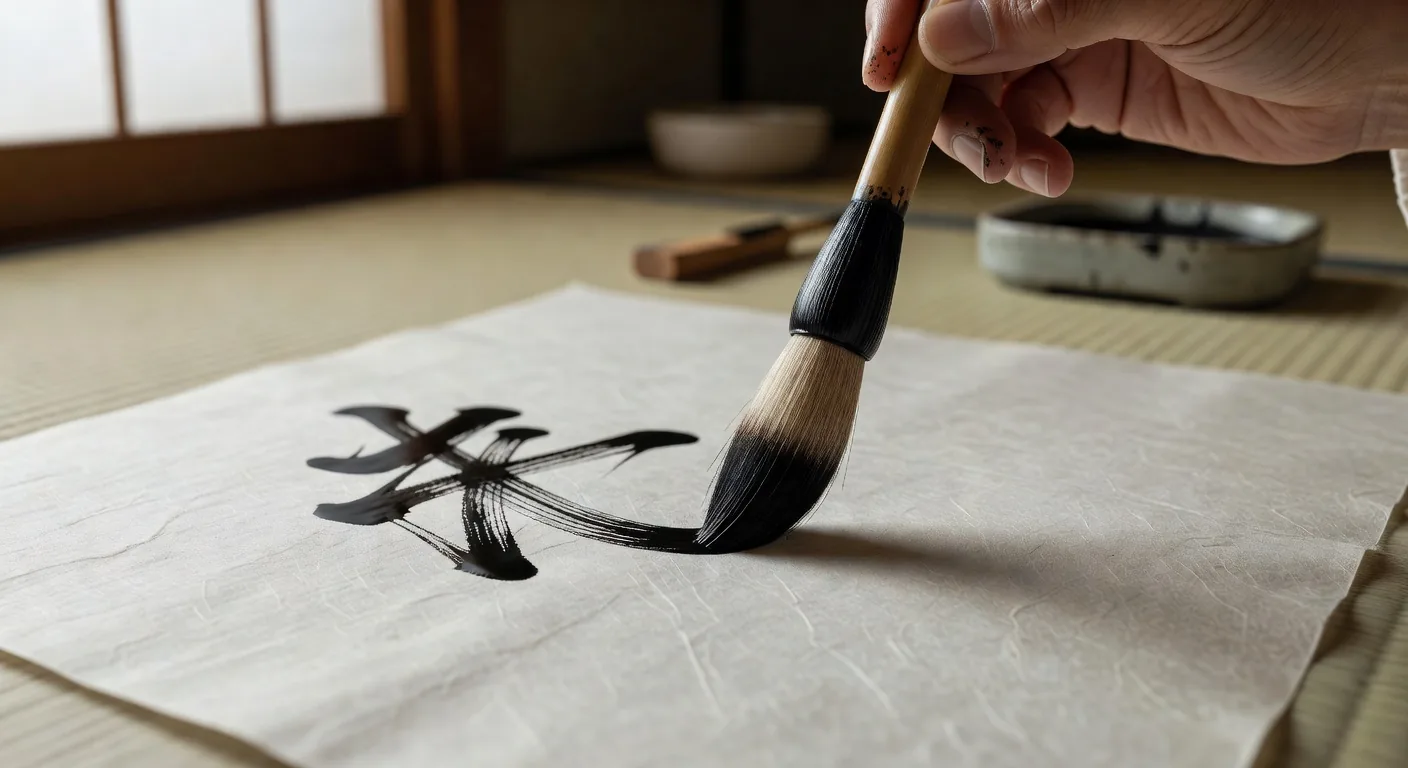
Yuki Haramoto
Calligrapher & Visual Identity Designer, Kyoto
Yuki Haramoto trained for twelve years in the classical shodo tradition before founding her studio, Hakucho, which creates visual identities for luxury Japanese brands using hand-lettered mark-making as a foundation.
Q: How does your training in shodo inform your contemporary design work?
Shodo teaches you to be completely present in each moment. When you put brush to paper, there is no undo, no revision — only the stroke that emerges from your state of mind, your posture, your breath. That radical presence has shaped everything I do. In brand identity work, I ask the same question I was taught in shodo training: what is the essence? Not what is the most interesting, or the most clever, but what is the true nature of this thing? When you can answer that, the form suggests itself.
Q: Japanese design is having enormous global influence right now. What do you think international designers misunderstand about it?
They see the aesthetic — the white space, the minimal forms — but they don't always see the intention behind it. Japanese minimalism is not the minimalism of absence. It's the minimalism of attention. Every element that remains has been deliberately chosen. Every space that is empty is empty on purpose. When Western designers adopt Japanese aesthetics without Japanese sensibility, you get beautiful surfaces that lack depth. The surface is the last thing. The philosophy comes first.
Q: What are you currently most excited about in your practice?
I have been working with traditional Japanese paper — washi — as both a design material and a conceptual foundation. Washi is made from the inner bark of the kozo plant, and it is extraordinary: translucent, strong, textured, alive. Working with it forces me to think about impermanence in a very physical way. The paper itself teaches you something about light and fragility and time.
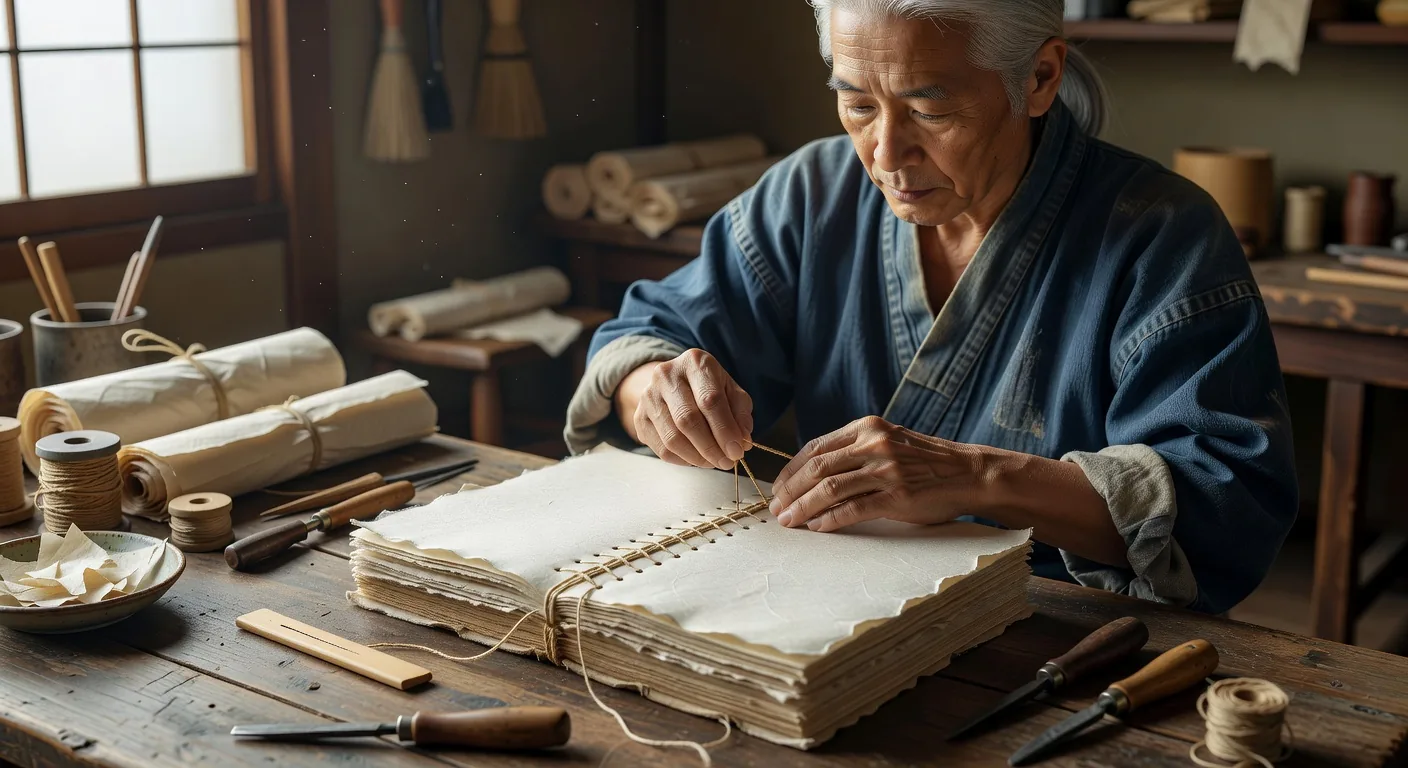
Masao Taniguchi
Book Arts Master & Publishing Designer, Tokyo
Masao Taniguchi has spent thirty years exploring the intersection of traditional Japanese bookbinding and contemporary publication design. His atelier in Yanaka, Tokyo, produces limited-edition artist books alongside commissioned publications for museums and cultural institutions worldwide.
Q: The book feels like a physical format under pressure from digital culture. How do you think about this tension?
I think the digital and the physical are not in competition — they serve different human needs. The screen is for speed, convenience, searching, connecting. The book — the physical object, especially one made with care — is for dwelling. For the kind of sustained attention that produces genuine understanding. Japanese culture has always valued the object as container of meaning: the way a bowl is held, the weight of a sword, the texture of a scroll. A well-made book belongs to this tradition. It is not just text delivery — it is an experience of craft.
Q: Tell us about the traditional Japanese binding techniques you work with.
The main traditional binding I use is yotsume toji — four-hole binding — which produces books with exposed thread along the spine. It's extraordinarily beautiful, and it forces you to slow down. You cannot rush this work. But I also work with fukuro toji (hollow book binding), which creates pages that are folded over themselves, producing a book in which only the outer surface of each spread is used — the inner pages are sealed. There's something very Japanese about that: the hidden interior, accessible only if you choose to cut the pages open.
Q: Who do you consider the most significant influences on your work?
The great tradition of Japanese printing and design is always present — the ukiyo-e masters, the Meiji-era book designers who synthesized Japanese and European traditions so elegantly. But my most important teacher was the potter Shoji Hamada, who said that the maker should step back and allow the materials to speak. I have tried to practice this: to let the paper, the thread, the ink say what they have to say, and to be present enough to hear them.
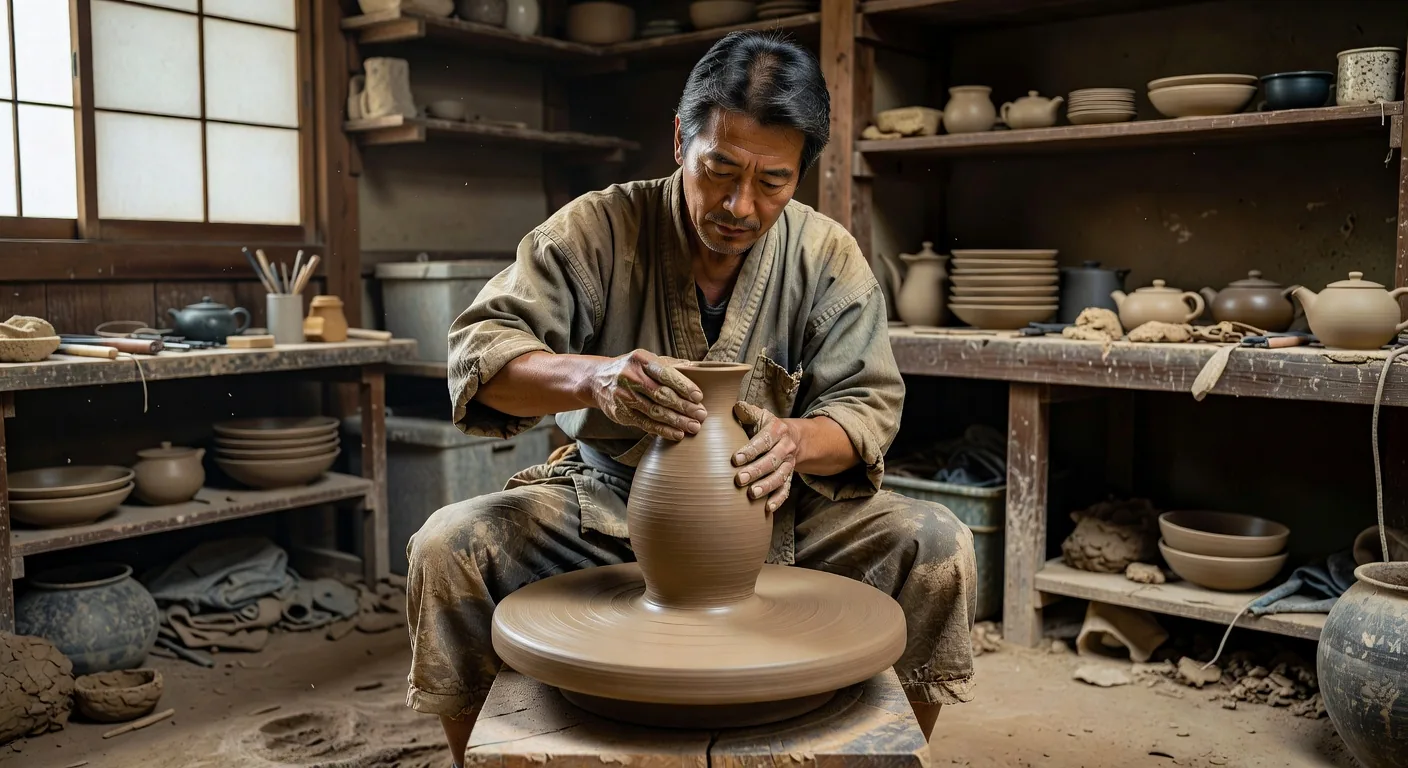
Rina Ogawa
Ceramic Artist & Studio Founder, Mashiko
Rina Ogawa works from the legendary pottery town of Mashiko, where the tradition of folk ceramics was preserved and elevated by the legendary Shoji Hamada. Her work is deeply rooted in mingei (folk craft) principles while remaining unmistakably contemporary in form and surface treatment.
Q: You trained in Mashiko under traditional masters. How did that training shape your sense of what ceramics can be?
The most important lesson I learned was about the relationship between the maker and the material. Clay is alive. It has its own memory, its own will. The wood-fire kiln introduces another layer of unpredictability — the flame shapes the surface in ways I can guide but never fully control. My teachers taught me to work with this unpredictability rather than against it. To plan carefully, but then to release, to let the fire do its work, to accept what emerges with gratitude. This is very much the wabi-sabi spirit: to find beauty in what actually happens rather than in what you imagined.
Q: Your work often incorporates kintsugi-like golden repairs. What draws you to this practice?
Kintsugi is philosophy made visible. The crack is not a failure — it is a record. The repair does not hide the damage; it celebrates it. In Japanese culture we say mono no aware — the beauty of things that pass. Kintsugi embodies this perfectly: it says that the broken thing that has been repaired is more beautiful than the perfect thing that was never tested. I try to carry this idea in all my work, not just in the repairs but in the surfaces themselves — I welcome the fire marks, the ash deposits, the small imperfections that make each piece singular.
Q: What does your day in the studio look like?
I begin before sunrise, when the light in Mashiko is extraordinary — very clear and still. I prepare my clay, clean my tools, and spend a few minutes in quiet before beginning to throw. The morning is for making; the afternoon for trimming, handling, preparing glazes. I fire the kiln every three or four weeks, and those firings are communal events — friends and colleagues come to help load and watch the temperature. The kiln is a living thing, and tending it together is one of the most important parts of the work.