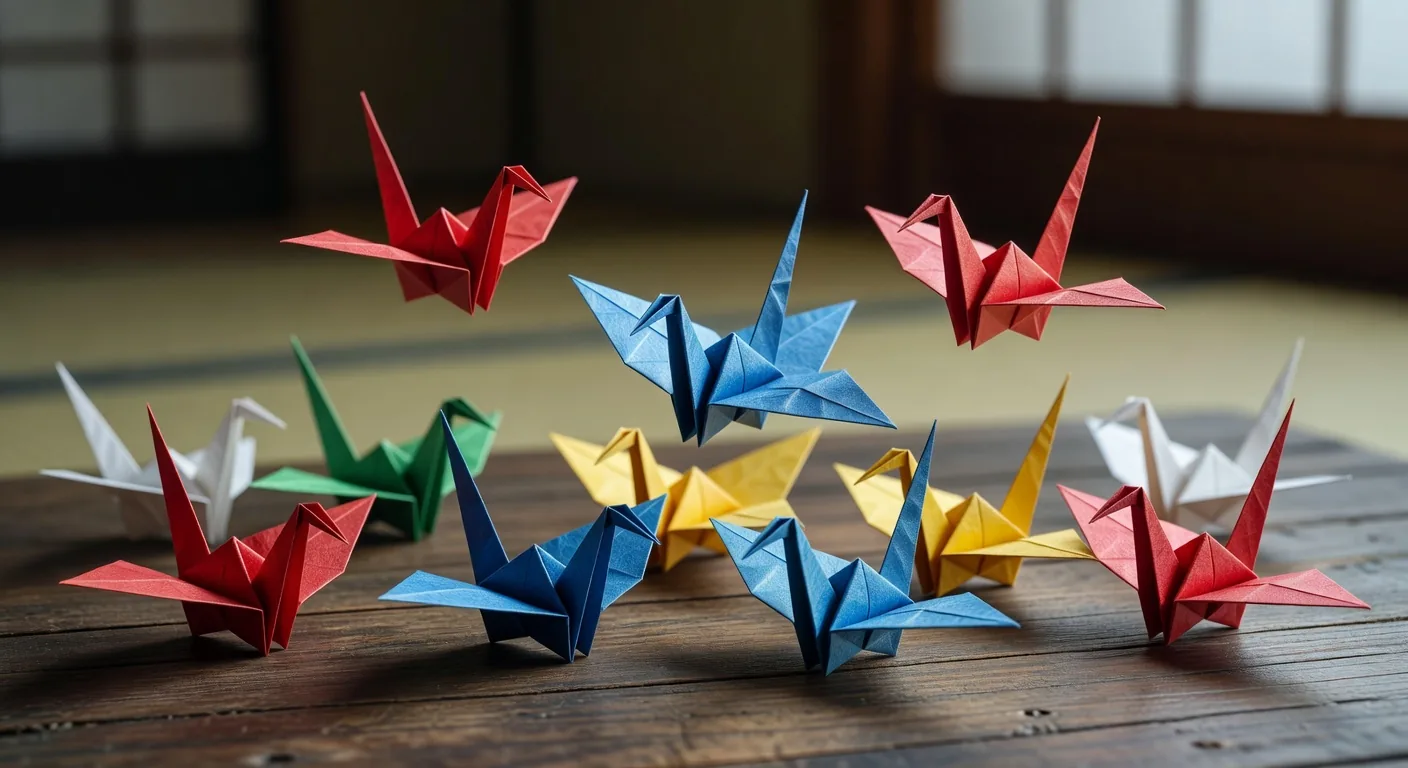
Japanese approaches to organization are not about tidiness for its own sake. They are about creating environments that support clarity of mind, purposeful action, and the deep contentment that comes from being surrounded only by what you truly need and love.
The global success of Marie Kondo's KonMari method, with its famous question "Does it spark joy?", surprised many in the West. But to anyone familiar with Japanese culture, it was entirely predictable. Organization and its philosophy have deep roots in Japanese life — in the precision of the tea ceremony, in the zen practice of soji (cleaning as spiritual practice), in the industrial methodology of 5S. Japan has long understood that how we organize our physical world reflects and shapes our inner world.
KonMari: Joy as the Criterion
Marie Kondo's method is deceptively simple: hold each object you own and ask whether it sparks joy. Keep what does; thank and release what doesn't. The power of this approach lies not in its practical technique but in its philosophical reorientation: it asks us to take responsibility for every object in our environment and to make conscious, active choices about what we allow into our lives.
KonMari is also notable for its order of categories: clothes first, then books, papers, miscellaneous items, and finally sentimental items. This sequence is carefully calibrated to train the "joy-sensing" muscle before confronting the most emotionally charged possessions. Like a good yoga practice, it meets you where you are and takes you progressively deeper.
"The question is not 'do I need this?' but 'does this belong in the life I am choosing to live?' That is a very different question."
5S: Industrial Wisdom for the Home
Developed within Japanese manufacturing — most famously at Toyota — the 5S methodology offers a systematic framework for creating and maintaining order in any environment. The five principles translate from Japanese as follows:
-
Seiri — Sort
Remove everything unnecessary from the space. If in doubt, set it aside in a holding area and revisit after 30 days. What you haven't missed can go.
-
Seiton — Set in Order
A place for everything and everything in its place. Objects should be stored close to where they are used, accessible without effort.
-
Seiso — Shine
Clean regularly, and while cleaning, inspect. Cleaning reveals problems before they become crises. Dirt and disorder are information.
-
Seiketsu — Standardize
Create systems and habits so that order is maintained without effort. The goal is a home that organizes itself through well-designed flows.
-
Shitsuke — Sustain
Discipline, or the practice of maintaining what has been created. Not punishment but the quiet daily habit of attention and care.
Mono no Aware: Appreciating What You Have
Mono no aware — the pathos or sensitivity of things — is a Japanese aesthetic concept that describes the bittersweet awareness of impermanence. Applied to home organization, it suggests a different relationship to possessions: rather than accumulating objects, we learn to be moved by the objects we have; to see them clearly, to appreciate them fully, and to release them gracefully when their time has come.
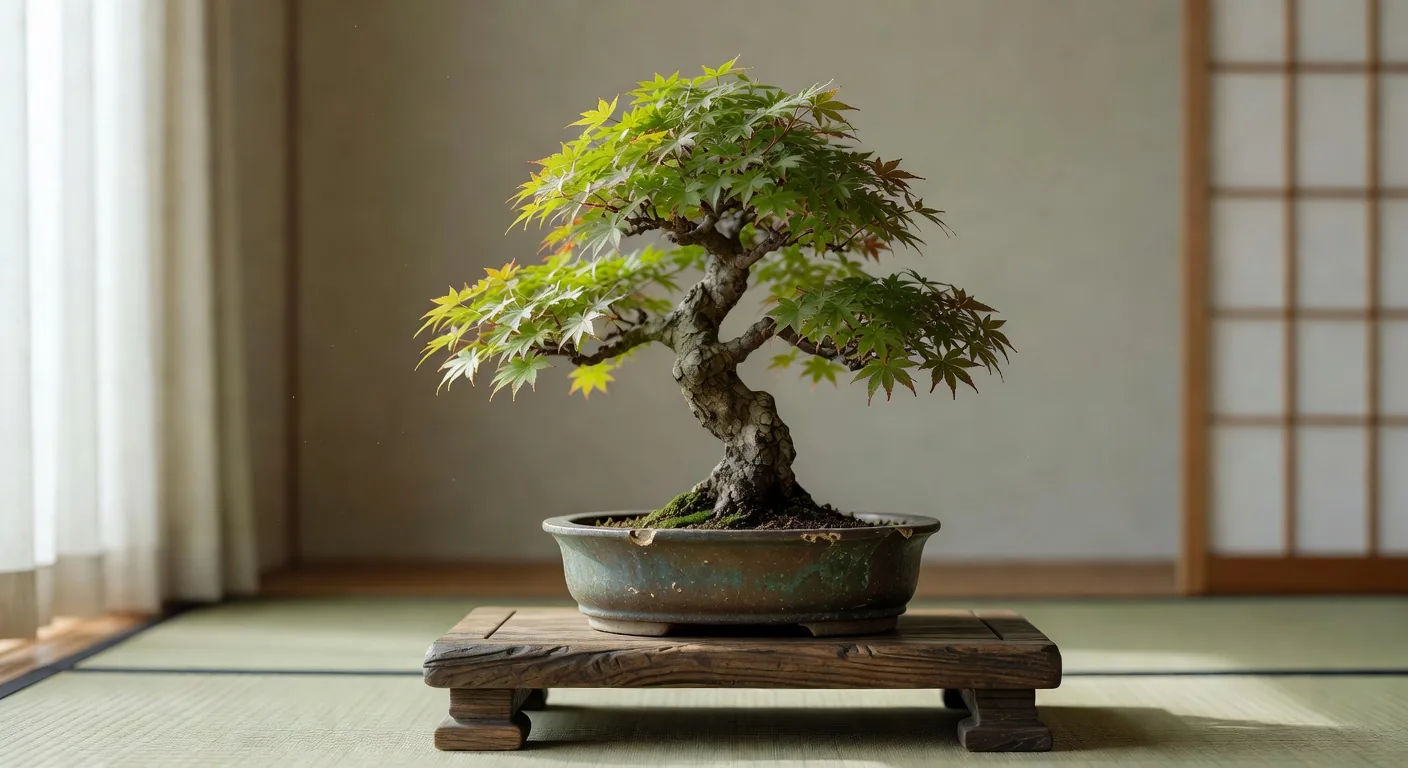
The bonsai practice is a useful metaphor here. A bonsai tree is not a small tree that has been prevented from growing — it is a living sculpture, shaped over years by deliberate pruning, wiring, and cultivation. The result is more beautiful, more expressive, and more present than any untended growth could be. Our homes can be the same: deliberately shaped spaces that express exactly who we are and what we value.
Practical Tips for a Japanese-Inspired Home
You do not need to adopt any single system wholesale. The principles are the tools; how you apply them is up to you. Here are some practices to begin:
- Begin with one drawer or one shelf. The most important step is to start somewhere small and experience the satisfaction of completion.
- Create a daily reset ritual. Ten minutes each evening to return objects to their designated places — not a chore, but a transition between the day and the night.
- Designate empty surfaces. The Japanese call this ma — negative space as an active design element. An empty shelf is not wasted space; it is breathing room for the eye and the mind.
- Store vertically. Marie Kondo's folding method — standing clothes upright rather than stacking — is a small revolution in how we interact with our belongings. Applied to any category, vertical storage makes everything visible and accessible.
- Make the functional beautiful. Japanese design refuses the distinction between tool and art. Choose objects that are both useful and beautiful — a well-made wooden box, a ceramic tray. The quality of what surrounds us affects the quality of our attention.